In 1989, the Asia-Pacific Economic Cooperation forum was established in Shanghai, China. The founding of this organization is sometimes referred to as the Shanghai Accord; see below¹ for further details about APEC. (Referring to APEC as a Shanghai Accord is a misnomer, and quite confusing, as will be explained.)
Also, please be aware that APEC has no affiliation with AIPAC despite the similar acronyms!
In 2016, there was talk of a Shanghai Accord, one that had less to do with APEC and much more to do with the Plaza Accord.
First, let's go back in time a bit, to 1985.
Weakening the U.S. dollar then...
The Plaza Accord is a 1985 agreement signed by then-U.S. Treasury Secretary James Baker and the finance ministers of pre-unification West Germany, Japan, France, the UK and the other G8 countries. The intent was to guide the U.S. dollar lower versus the Japanese yen and German mark.
The Plaza Accord was motivated by the U.S. dollar's sharp appreciation with respect to other countries' currencies. It was put in place in order to jump-start growth globally while easing the U.S. current-account deficit. This would be accomplished by weakening the U.S. dollar and making U.S.-manufactured goods and services more globally price competitive.
1985 was the era of GATT (PDF "restricted document). The World Trade Organization (WTO) was still in the future (1995). China did not achieve most-preferred trading status in the WTO for another 15 years.
...and now?
Since 2010, the Bank of China (China's central bank) had been under pressure to allow the Chinese yuan to transition to a floating currency. The yuan remained a pegged currency in 2015.
Due to the prominence of China's production output (and maybe other reasons?) the International Monetary Fund (IMF) included the yuan in its basket of global reserve currencies as of 2015 onward. See Special Drawing Rights which explains the underlying concept of "global reserve currencies" plural. The IMF assumed that Chinese monetary policy would soon become more consistent with that of a free market, rather than a centrally-planned economy.
China Dream
The IMF was wrong. The yuan continued weakening against the US dollar. China remained "socialist with Chinese characteristics" which, according to the Chinese Communist Party, is synonymous with the Chinese Dream. In 2013, a related slogan was "aircraft carrier dream".
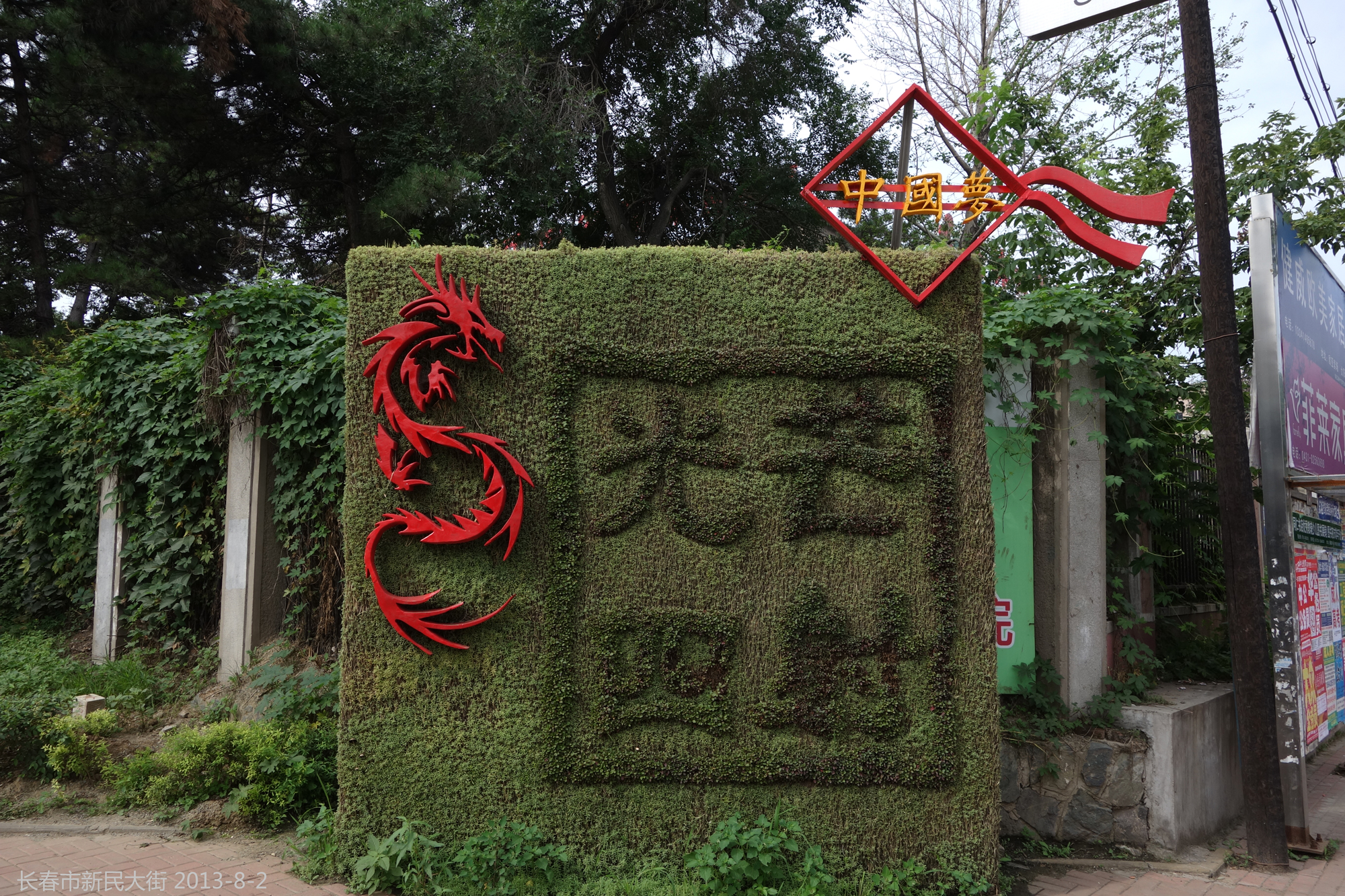 |
| "China Dream Shines Out" in city of Changchun formerly the capital of Manchuria and now the capital of the Chinese automotive industry; photo credit Wikimedia Commons |
Mercantilism, protectionism, fixed-rate currency, and state-sponsored enterprise are also components of the Chinese dream. A transition from investment to consumption for the Chinese people has not happened, despite former UK Prime Minister George Osborne's rosy prediction in 2013. Instead, there has been a convergence of market economy values and state nationalism. The great rejuvenation of the Chinese nation is a metaphor for the "great rejuvenation of the Chinese race".
Fear at the time (2016) was that further Chinese central bank actions to sharply depreciate the yuan (thus making Chinese goods relatively cheaper for export) would send the trade-weighted dollar sharply higher, perhaps even into hyperstrong terrain not seen since 1981 to 1984.
How to inspire household animal spirits
This article in the Wall Street Journal's MarketWatch publication, To stave off currency war, is it time for a coordinated response to the Chinese yuan? conjectured that another accord might secretly take place at the G-20 meeting of central bankers in February 2016, in Shanghai. Instead of paraphrasing, I'll include an excerpt.